When it comes to making a home truly accessible, few upgrades have as much immediate impact on minimizing fall risk as a zero-threshold shower. A roll-in shower is one of the most effective ways to improve bathroom safety for seniors, especially for those with mobility challenges.
For many people, installing a wheelchair-accessible shower can be truly transformative. Also referred to as a curbless shower, its no-step entry offers easy access for manual wheelchair users, and those requiring walking aids.
In this nuts-and-bolts guide, I’ll walk you through everything you need to know about a roll-in shower installation—from basic features to installation considerations—to help you make informed decisions for yourself or loved ones.
“A roll-in shower, or curbless shower, features a no-step entry that allows direct access for mobility aids like wheelchairs and walkers.”
What Is a Roll-In Shower?
Roll-in showers are one of the most effective upgrades for reducing fall risk, especially as part of a larger aging-in-place bathroom plan. A roll-in shower is built with accessibility in mind. Unlike standard showers that have a curb or step, a roll-in shower has a zero-threshold entry.
That means a person using a wheelchair or walker can roll or walk in without lifting their feet or needing assistance.
This simple design change makes a world of difference. It not only eliminates fall risk, when combined with properly installed grab bars for seniors, but also offers dignity, independence, and easier caregiving when needed.
Key Benefits
In conversations with other seniors or their adult children, these roll-in shower benefits consistently stand out:
- Preserves independence: Enables seniors to manage personal care on their own
- Prevents falls: Curbless design and added safety features reduce accident risks
- Supports aging in place: Makes staying at home longer both safer and more realistic
- Helps caregivers: Allows safe, efficient assistance without awkward lifting or maneuvering
While the benefits are clear, the real effectiveness of a roll-in shower comes down to how it’s designed. The right combination of safety features and accessible fixtures makes daily bathing both safer and more comfortable.
Who Should Consider a Roll-In Shower?
They are a popular option for homeowners planning long-term aging-in-place renovations because they remove one of the most common fall hazards in the bathroom. Roll-in showers are ideal for people who use walking aids or have difficulty stepping over a traditional shower curb, for example:
- seniors with balance issues
- homeowners planning aging-in-place upgrades
- caregivers assisting with bathing
- wheelchair users
Design Features of a Wheelchair Accessible Shower
There are several must-have features that make a roll-in shower truly functional and safe.
Curbless Shower Design
The defining characteristic of any wheelchair-accessible shower is its completely flat, curb-free entrance. This seamless transition from bathroom floor to shower floor allows wheelchairs to roll directly into the shower space without any obstacles.
This design requires careful planning around:
- Proper floor sloping for drainage (typically 1/4 inch per foot toward the drain)
- Waterproofing considerations to prevent leakage
- Transition details between bathroom and shower flooring
Slip-Resistant Flooring Options
The shower floor material itself needs special consideration—for example:
- Textured porcelain or ceramic tiles with high slip-resistance ratings
- Small mosaic tiles with numerous grout lines that create natural grip
- Specialized rubber or vinyl flooring designed for wet areas
“Don’t settle for ‘grab bars’ from the hardware store unless they’re ADA-compliant. Always check weight ratings—and don’t skip professional installation.”
Support Bars and Safety Rails
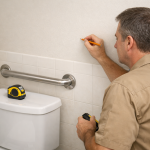
Strategic placement of grab bars for seniors is non-negotiable in a roll-in shower. Based on ADA guidelines, and experience, I recommend:
- Horizontal grab bars mounted 33—36 inches (84—92 cm) from the floor
- Vertical bars near the shower entrance for entry and exit stability
- L-shaped bars in corners where appropriate
- Bars capable of supporting at least 250 pounds (114 kg) of force
Remember, these aren’t just for emergency use—these upgrades are often part of larger bathroom renovations for seniors. Moreover, they provide regular support during normal showering activities for those with balance or strength limitations.
Shower Controls and Accessible Fixtures
Thoughtful control placement makes a tremendous difference in usability, including:
- Mounting controls at 38—48 inches (97—122 cm) high and within reach from a seated position
- Lever-style handles rather than knobs (easier for arthritic hands)
- Thermostatic or pressure-balanced valves to prevent scalding
- Clearly marked hot and cold indicators (preferably with color and texture)
Seating for Safety
For many wheelchair users and seniors, a shower seat is essential—with options like:
- Wall-mounted fold-down seats (saves space when not in use)
- Removable shower benches (offering flexibility)
- Built-in tiled benches (permanent and sturdy)
- Transfer seats that extend beyond the shower (helpful for wheelchair transfers)
The ideal height is typically 17—19 inches (43—48 cm) from the floor, similar to a wheelchair for easy transfers.
So, what separates a truly senior-friendly roll-in shower from a basic remodel? It comes down to a handful of carefully planned features designed to maximize safety, comfort, and independence.
Roll-in Shower Features
| Feature | Why It Matters |
|---|---|
| Curbless Entry | Allows wheelchair or walker users to enter without lifting or stepping |
| Slip-Resistant Flooring | Reduces the risk of falls on wet surfaces |
| Grab Bars and Safety Rails | Offers support during transfers, standing, and seated use |
| Accessible Controls | Easy-to-reach lever handles with anti-scald protection |
| Built-In or Fold-Down Seating | Provides safe, stable seating for bathing comfort and convenience |
Together, these features create a shower that’s not only accessible but also comfortable and reassuring for daily use.
Of course, even the best features won’t work properly without enough space. Proper layout and measurements are essential to ensure a roll-in shower functions safely for wheelchair users and caregivers.
Roll-In Shower Space Requirements
Building codes have been honed over decades and should be your starting point—always.
Recommended Accessibility Measurements
The Americans with Disabilities Act (ADA) provides helpful guidelines—such as:
- Minimum interior dimensions of 60 x 30 inches (153 x 76cm)
- Clear floor space of at least 60 x 60 inches (153 x 153cm) outside the shower entry
- Shower opening width of at least 36 inches
These dimensions allow enough space for wheelchair users to enter, exit, and turn around safely.
Bathroom Layout Considerations
Beyond the shower itself, the entire bathroom layout needs to be considered to ensure accessibility:
- Door width of at least 36 inches (92cm)
- Turning radius of 60 inches (153cm) in the main bathroom area
- Proper spacing around other fixtures like toilets and sinks
- Consideration of transfer space from wheelchair to shower seat
For families with aging parents, I suggest planning for the future—even if full wheelchair access isn’t currently needed, creating the space now prevents expensive renovations later.
“Installing a roll-in shower is a major project—don’t be afraid to ask contractors about their experience with accessibility upgrades. A skilled pro can make the difference between a safe setup and one that misses the mark.”
Once the space requirements are understood, the next step is planning the installation itself.
Installation Process and Waterproofing Methods
Before planning any safety-related home modifications for seniors, the structural integrity of the home must always be assessed.
Subfloor Modifications
Creating a truly barrier-free entry typically requires:
- Recessing the shower floor by modifying floor joists or creating a concrete depression
- Building a sloped shower pan that directs water to the drain
- Ensuring structural integrity throughout these modifications
Waterproofing Systems
Water containment is a critical concern with curbless showers. This usually requires:
- Complete waterproofing membrane systems
- Linear drains at the shower entrance or back wall
- Proper slope construction to direct water away from the bathroom floor
- Careful attention to sealing all penetrations and transitions
Professional vs. DIY Installation
While I appreciate a good DIY project, a roll-in shower requires professional installation:
- The waterproofing requirements are technically demanding
- Structural modifications need expert evaluation
- Proper sloping for drainage requires precision
- Accessibility standards should be carefully followed
Naturally, one of the next questions homeowners ask is what a roll-in shower installation will cost.
Costs and Budget Planning
Price Range Breakdown
Based on current market conditions, here’s what I typically see:
- Basic roll-in shower conversion: $3,000—$5,000+
- Mid-range installation with quality materials: $5,000—$10,000+
- High-end custom designs with premium features: $10,000—$20,000+
One of the most common questions homeowners ask is how much a roll-in shower installation will cost. The final price depends on the size of the space, the materials you choose, and the level of customization involved.
Roll-in Shower: Features and Costs
| Feature | Estimated Cost |
|---|---|
| Basic Roll-In Shower | $3,000 – $5,000 |
| Mid-Range (Custom Features) | $5,000 – $10,000 |
| Luxury/Full Custom Design | $10,000+ |
Costs can increase if major structural changes are required or if the bathroom needs a full redesign.
Factors That Influence Pricing
Several elements affect the final cost:
- Extent of structural modifications needed
- Size of the shower area
- Material choices (tile type, fixtures, glass enclosures)
- Additional accessibility features
- Local labor rates and permit requirements
Financial Assistance Options
- Medicaid Home and Community Based Services waivers (varies by state)
- VA grants for veterans with service-connected disabilities
- Local aging agency programs and grants
- Tax deductions for medical home modifications
- Reverse mortgages specifically for home modifications
“I’ve helped families navigate accessible design for years—and I’ve seen just how life-changing a properly designed roll-in shower can be. This guide covers everything you need to make confident decisions.”
Roll-In Shower vs. Other Bathing Options
For homeowners comparing accessible bathing options, roll-in showers and walk-in tubs are two of the most common solutions.
Walk-In Tubs: Key Differences
Walk-in tubs differ in important ways:
- Walk-in tubs typically have a small curb of 3—4 inches (7.5—10cm)
- They’re suitable for those who can step over small thresholds
- Can be more expensive depending on features
- May require extensive floor modifications
Not sure whether a roll-in or walk-in tub is the better fit? This side-by-side comparison highlights the key differences so you can make a confident choice.
Roll-in Shower vs. Walk-in Tub
| Feature | Roll-In Shower | Walk-In Tub |
|---|---|---|
| Threshold | No curb (completely level) | Small step-in curb |
| Best for | Wheelchair users | Seniors with some mobility |
| Seating | Optional fold-down seat | Built-in seating |
| Ideal For | Full accessibility needs | Moderate fall prevention |
While both options improve safety, the right choice depends on your mobility level and long-term needs. Thinking ahead now can save costly remodels later.
Walk-In Tubs: Pros and Cons
In some cases, a walk-in tub may be a better alternative with its different approach to accessible bathing—for example:
- They maintain the bathing experience some seniors prefer
- Feature a watertight door and built-in seat
- Require users to step in and wait for filling and draining
- Generally more expensive than roll in showers
- Take up less space than most accessible showers
Shower-Tub Combinations with Transfer Systems
For families wanting maximum flexibility:
- Retains a tub while adding accessibility features
- Uses transfer seats or lifts to facilitate bathing
- Maintains resale value by keeping a tub in the house
- Requires significant space for proper implementation
Design Aesthetics and Accessible Showers
Concerns
Something I do hear from families is they worry the shower could end up looking institutional. Rest assured, a roll-in shower needn’t look clinical or unattractive. In fact, a well-designed roll-in shower can look quite stylish.
Material Choices
Modern accessible design embraces style:
- Large-format porcelain tiles with minimal grout lines
- Decorative glass mosaic accent walls
- Natural stone options with proper sealing and texture
- Sleek linear drains that blend seamlessly with flooring
Universal Design Principles
Good accessible design benefits everyone with features such as:
- Clean lines and open spaces create a spa-like feeling
- Handheld showerheads are convenient for all users
- Bench seating provides comfort regardless of mobility
- Lever controls are simply easier to use
Maintenance and Cleaning
“One thing to be aware of when cleaning, caustic products are great at removing soap scum and grime but can also take their eventual toll on caulking and seals. So, make sure to rinse the shower well after using these products—and keep up your grout and caulking maintenance.”
Daily and Weekly Cleaning Tips
I suggest a simple maintenance routine—such as:
- Use a squeegee after each shower to reduce water spots and mineral buildup
- Apply daily shower sprays to minimize soap scum
- Choose cleaning products that don’t require heavy scrubbing
- Consider automatic shower cleaners for those with limited reach or strength
Long-Term Care Requirements
The following practices help preserve the shower:
- Regular grout sealing (typically annually)
- Checking and replacing silicone caulking as needed
- Inspecting drains for proper function
- Testing grab bar stability periodically
Making the Roll-In Shower Choice
Roll-in showers are often considered one of the most effective upgrades within a broader aging-in-place remodeling strategy. Whether you’re planning ahead for your own future needs or helping elderly parents navigate aging in place, these accessible bathroom features can be liberating.
A roll-in shower represents an investment in safety, independence, and quality of life.
Best Approach:
- Assess current and future mobility needs realistically
- Consult with accessibility experts for personalized recommendations
- Work with experienced contractors who understand accessible design
- Explore financial assistance options
- Consider how these modifications fit into a broader aging-in-place strategy
Final Thoughts
Investing in a roll-in shower isn’t just a safety upgrade—it’s a lifestyle choice that supports privacy, autonomy, and peace of mind. And in my book, that’s always worth the effort.
“A thoughtfully designed bathroom doesn’t just prevent falls—it preserves dignity.”
Whether you’ve decided to age in place yourself or you’re helping a loved one prepare, it’s a change that pays off every single day.
If you’re planning a safer bathroom for aging in place, you may also want to explore other accessibility upgrades such as walk-in tubs, senior-friendly bathroom renovations, or a broader aging-in-place remodeling plan.
Want to keep exploring? Here are some related articles: