After working with seniors for many years now, I know that emergency preparedness is essential for older adults who wish to maintain independence in their own homes. Emergencies rarely give notice—they arrive suddenly and take many forms, from severe weather to civil unrest.
For seniors aging in place, having a solid emergency plan can mean the difference between a manageable situation and a life-threatening crisis.
This guide focuses on the bigger picture—how to prepare your home, your supplies, and your response plan—while connecting to critical safety topics like evacuation planning, fire prevention, and power outages, including how to build a fire emergency evacuation plan that works for seniors aging in place.
Why Emergency Preparedness Matters
Preparing for emergencies takes on special importance for older adults living independently. Our needs change as we age. Needs become more specific, while the ability to respond quickly often declines.
For example, many seniors face challenges with mobility, medication management, or sensory impairments that require special consideration during emergencies.
Being prepared for whatever nature—or life—throws at you isn’t about fear. It’s about building confidence. When we’re ready for the unexpected, we can enjoy independent living with a greater peace of mind.
For the adult children of aging parents—knowing that mom or dad has emergency plans in place can also provide invaluable reassurance.
Creating a Senior-Friendly Emergency Preparedness Kit
Customizing Basic Emergency Supplies
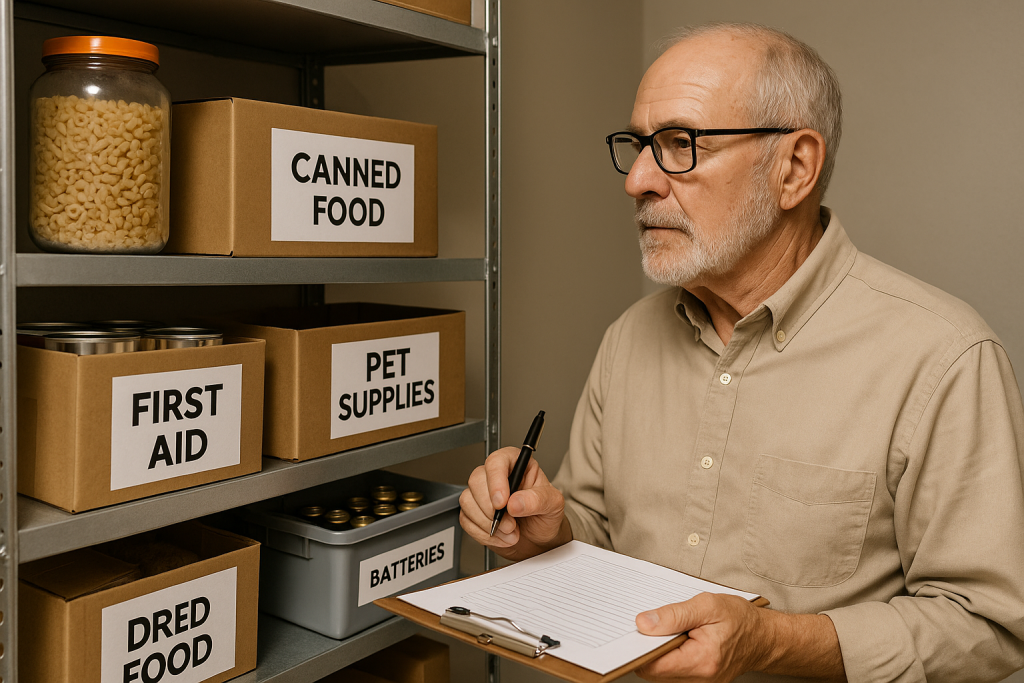
Before diving into detailed planning, start with the essentials. A well-prepared emergency kit is the foundation of any response plan.
What exactly should go in an emergency kit for seniors? Here’s a quick-reference list tailored specifically to older adults—covering medical, comfort, and practical needs you’ll want to have on hand before a crisis strikes.
Essential Emergency Kit for Seniors
| Category | Essentials for Seniors |
|---|---|
| Water & Food | 3-day water supply (in lightweight containers), ready-to-eat meals, pull-top cans, food for dietary needs |
| Medications | 7-day supply of prescriptions, waterproof pill pouch, printed medication list with dosages and allergies |
| Medical Aids | Extra hearing aid batteries, spare glasses or magnifiers, backup cane or walker, battery backup for devices |
| Comfort Items | Thermal blanket, seasonal clothing, cleansing wipes, incontinence supplies, small personal comfort item |
| Tech & Power | Battery-powered or hand-crank radio, power bank, flashlight, spare phone charger |
| Important Paperwork | Large-print emergency contacts, ID copy, medical records, pharmacy and doctor info in waterproof sleeve |
A basic emergency kit needs several modifications to serve seniors effectively.
“Stocking up on emergency supplies doesn’t have to break the bank. One of my favorite low-cost tools? Good old food-grade zip-style bags. They’re moisture-resistant, inexpensive, and you can label and date them with a marker. I use them to store documents, batteries, and even small food items in my own kit. It’s a simple way to stay organized without spending a fortune.”
I recommend storing at least a three-day supply of water (one gallon per person per day) in containers that aren’t too heavy to lift.
Food should be non-perishable and easy to open—many emergency rations require strong hands or tools, which can be a challenge.
Look for pull-top cans, food in pouches, and items that don’t require cooking.
For seniors with dietary restrictions, choose emergency foods that meet their health needs and won’t pose risks during a crisis.
Medication Management in Emergency Preparedness
For seniors, medication management becomes a critical part of emergency preparedness. Consider keeping at least a seven-day supply of essential prescriptions in waterproof containers within the emergency kit.
But being prepared goes beyond simply stockpiling medications. Always include a printed medication list that details:
- Names of all prescriptions and over-the-counter medications
- Exact dosages and schedules
- Doctor contact information
- Pharmacy details
- Known allergies
- Medical conditions
This documentation is invaluable if emergency responders need to provide care without access to a senior’s full medical history. Consider updating this list every three months to reflect medication changes.
Medical Equipment Emergency Preparedness
For seniors using medical equipment, emergency preparedness must account for power outages and mobility concerns. Make sure to include:
- Extra batteries for hearing aids
- Backup glasses or magnifiers
- Spare walking aids (folding cane or walker)
- Battery backup for oxygen concentrators if used
- Manual backup options for electric medical devices
For extended outages, backup power solutions—like a whole home generator for aging in place—can play a critical role in maintaining safety and independence.
For seniors using electrically powered medical equipment, consider registering with local utilities to receive priority restoration services and exploring options for backup power sources such as generators or backup battery systems.
Emergency Communication
Weather Radio as an Emergency Preparedness Tool
In any emergency preparedness discussion, keep in mind the importance of reliable information sources during emergencies.
A battery-operated or hand-crank emergency weather radio serves as a lifeline when other communication systems fail. Look for models with large, easy-to-operate controls and clear sound for seniors with dexterity or hearing challenges.
Many modern emergency radios offer features especially helpful for seniors, such as flashlights, USB charging capabilities for phones, and programming that automatically broadcasts emergency alerts.
Creating a Comprehensive Emergency Contact System
Emergency preparedness for seniors must have thorough communication plans. Part of those plans should be a printed emergency contact list that includes:
- Family members and friends (local and distant)
- Neighbors who can check in during emergencies
- Healthcare providers
- Local emergency services
- Utility companies
- Pharmacy contacts
- Religious organization or support group members
Where should you keep your emergency contacts—and what should you include? This printable list makes it easy to organize the most important names and numbers, so they’re always close at hand.
Emergency Contact List Template
Use this printable sheet to organize key contacts for emergency preparedness.
| Category | Name | Phone / Email | Notes |
|---|---|---|---|
| Primary Family Contact | |||
| Backup Family Contact | |||
| Neighbor / Buddy | |||
| Doctor / Clinic | |||
| Pharmacy | |||
| Utility Company | (Gas, Electric, Water) | ||
| Local Emergency Services | (Fire, Police, EMS) | ||
| Faith Group / Support Circle |
Power Banks for Emergency Preparedness
Today’s emergency preparedness strategies incorporate technology solutions that benefit seniors. Portable power banks ensure that mobile phones remain functional during power outages.
These are now quite affordable and reliable. I advise seniors to keep at least one fully charged power bank in their emergency kit and to check it regularly.
For seniors using medical alert devices as part of their preparedness plan, consider systems with built-in backup batteries and regular testing to ensure they function during power failures.
Comfort and Mobility in an Emergency
Emergency Preparedness Comfort Items for Seniors
Personal comfort items can become essential for health and wellbeing during an emergency. Consider including:
- Lightweight thermal blankets that provide warmth without bulk
- Spare sets of comfortable clothing appropriate for the season
- Personal hygiene items modified for emergency use (dry shampoo, cleansing wipes)
- Incontinence supplies if needed
- Comfort objects for support during stressful situations
These items help maintain dignity and physical wellbeing during extended emergency situations, which is critical for overall resilience.
Mobility-Focused Emergency Preparedness Planning
Emergency preparedness takes on added complexity for seniors with mobility challenges.
I always recommend keeping easy-on, supportive footwear within reach—something stable that can be put on quickly during an emergency. For seniors using mobility aids, I recommend:
- Keeping spare walking aids in strategic locations
- Having portable ramps available if using wheelchairs
- Identifying furniture that can provide stability during power outages when elevators don’t function
- Planning evacuation routes that accommodate mobility limitations
Practicing emergency movements regularly can improve confidence and capability when real emergencies occur.
Pet Considerations
Many seniors rely on pets for companionship, and emergency preparedness must include plans for animal companions. I suggest that seniors with pets prepare:
“Just like us, pets need comfort during emergencies too. Don’t forget to include something familiar and soothing for them in your emergency kit—a favorite toy, a soft blanket, or even a special treat. These little comforts can make a big difference when everything else feels unfamiliar.”
- Three days of food and water supplies for each pet
- Collapsible food and water bowls that store efficiently
- Spare medications with instructions
- Comfortable carriers or leashes for transportation
- Current photos and veterinary records stored in waterproof containers
For seniors with service animals, it’s important to plan for both the animal’s care and its working role during emergencies.
This might include spare equipment, special food, or documentation of service animal status for emergency shelters.
Leveraging Technology for Emergencies
GPS and Location Technology for Senior Safety
Modern emergency planning benefits greatly from location-based technology. For seniors with cognitive impairments or those who live alone, I suggest:
- GPS tracking devices that can be worn or carried
- Location-sharing apps on smartphones that allow family members to check locations
- Smart home systems that can detect unusual patterns and alert caregivers
These tools add an extra layer of safety—especially for seniors living alone or managing early-stage memory challenges.
Personal Alert Systems as Emergency Preparedness Tools
Personal emergency response systems form a cornerstone of modern emergency preparedness for seniors. These wearable devices allow immediate communication with response centers when help is needed. Look for systems that offer:
- Water-resistant designs that can be worn in the shower
- Fall detection capabilities
- Two-way communication features
- GPS functionality for use outside the home
- Battery life indicators to prevent unexpected failures
Some seniors initially resist these devices, seeing them as signs of dependence. I prefer to think of them as powerful tools for maintaining independence through enhanced emergency preparedness.
For a deeper look at devices designed to support independence and safety, explore how wearable tech for seniors fits into a modern emergency plan.
Smart Home Solutions for Emergency Situations
Smart home technology increasingly plays a role in comprehensive emergency preparedness for seniors. These systems can be lifesavers, and I frequently recommend:
- Smart locks that allow emergency access for family or responders
- Automated lighting systems that activate during power outages
- Voice-activated emergency calling capabilities
- Environmental sensors that detect dangerous conditions like smoke or extreme temperatures
These technologies work in the background as part of an overall emergency preparedness strategy, often providing alerts before situations become critical.
Maintaining an Emergency Plan
Regular Reviews of Emergency Supplies
Emergency preparedness isn’t something you do once—it requires regular upkeep. I advise seniors and their families to schedule quarterly reviews of emergency kits to:
- Replace expired medications
- Rotate food and water supplies
- Check battery function in all devices
- Update contact information and medical documents
- Assess whether changing health conditions require new emergency items
To make this process easier, set calendar reminders or tie reviews to seasonal changes or daylight-saving time adjustments.
Seasonal Adaptations to Emergency Preparedness
Effective emergency preparedness accounts for different seasonal challenges. I suggest seniors adjust their emergency kits with:
- Summer additions: cooling packs, sun protection, electrolyte drinks
- Winter preparations: hand warmers, extra blankets, ice melt, emergency heat sources
- Spring considerations: allergy medications, rain protection
- Fall preparations: earlier darkness solutions, transitional clothing options
Seasonal adjustments help keep your emergency plan relevant all year long.
Creating an Emergency Response Plan/gas-stove-safety
Kitchen fires are one of the most common household emergencies—understanding how to handle an oven fire safely can prevent a small incident from becoming a crisis. Many of these risks can be reduced with proper gas stove safety for seniors and safer cooking habits.
Mapping Emergency Evacuation Routes
Supplies are only half the equation—emergency preparedness also requires a clear action plan.
What should an evacuation plan actually include? Whether you’re planning ahead or facing an urgent situation, here’s a side-by-side breakdown of essential evacuation steps tailored specifically for seniors aging in place.
Evacuation Planning for Seniors
| Step | Before an Emergency | During an Emergency |
|---|---|---|
| Evacuation Routes | Identify multiple exits, including stair-free options if mobility is limited | Use marked, accessible exits; bring your mobility aid if needed |
| Transportation | Arrange backup transportation with neighbors, family, or local services | Contact your designated ride or local emergency transport if needed |
| Meeting Points | Choose a safe meeting place and share it with loved ones | Travel to your meeting location and notify family when safe |
| Mobility Aids | Keep an extra cane or walker near exits; prep portable ramps if needed | Bring lightweight, essential mobility tools with you |
| Communication | Share your plan with family, neighbors, and your care team | Call or text your emergency contacts as soon as possible |
These tasks ensure that when the time comes, there’s no hesitation—just calm, clear steps toward safety.
With a plan in place, it’s time to get specific. Seniors and caregivers should take these next steps to turn their emergency evacuation plan into real-world action:
- Identify and mark multiple exit routes from their homes
- Locate the nearest emergency shelters and confirm their accessibility
- Create simple maps with clear directions to safety
- Determine transportation options if self-evacuation isn’t possible
- Pre-arrange meeting locations with family members
For seniors with mobility concerns, make sure to identify exits that avoid stairs whenever possible and are wide enough for assistive devices.
Practicing Emergency Response Scenarios
The most prepared seniors regularly practice their emergency response plans. When conducting practice drills, make sure they include:
- Moving to safe locations within the home during weather emergencies
- Testing the function of emergency communication devices
- Practicing opening emergency food packages and accessing supplies
- Timing how long evacuations take to set realistic expectations
- Involving caregivers or family members in practice scenarios
These rehearsals build muscle memory and confidence—assets that make all the difference when real emergencies strike.
Building a Community Emergency Support Network
Perhaps the most powerful aspect of senior emergency preparedness is creating human connections. I encourage all seniors and their families to:
- Exchange contact information with trusted neighbors
- Register with local senior services for emergency check-ins
- Connect with community emergency response teams
- Inform local fire departments about specific needs or mobility challenges
- Arrange a buddy system with nearby friends or family
Human networks are often the fastest, most reliable part of any emergency response—especially in the first critical hours.
Emergency Preparedness and Peace of Mind
When I think about the true benefit of emergency preparedness for seniors, it’s not just the practical protection—though those are clearly important.
The greatest value I see is the confidence and peace of mind that proper planning provides.
For seniors, knowing they can handle unexpected situations allows them to live more fully in the present moment without constant worry.
For adult children of aging parents, knowing there’s a strong plan in place offers peace of mind—especially from a distance.
Final Thoughts
Emergency preparedness represents an investment in continued independence. By thoughtfully addressing potential challenges before they arise, seniors can maintain control over their circumstances even during unpredictable events.
That kind of proactive planning is the heart of aging in place—facing the future with confidence, preparation, and peace of mind. Emergency preparedness isn’t about expecting the worst—it’s about being ready for it.
With the right plan, supplies, and support systems in place, seniors can continue living independently with confidence, knowing they’re prepared for whatever comes next.
Want to keep exploring? Here are some related articles: