What is a Smart Home—and Why it Matters More Than Ever
“For seniors living alone, a home with smart devices offers something invaluable—peace of mind. Smart home automation can transform daily routines, making them safer. Whether you’re concerned about remembering to take medications, worried about falls in the dark, or want your family to feel more at ease, smart homes provide practical solutions that actually work.”
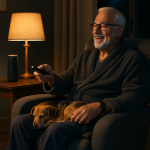
Picture this—you walk into your smart home living room, and the lights automatically brighten to welcome you. Your voice assistant gently reminds you that it’s time for your evening medication.
The front door locks itself after dark, the shades lower, and your thermostat adjusts to keep you comfortable throughout the night.
This isn’t a scene from a Hollywood movie—it’s what smart automation can do for your home today.
Put simply, a smart home uses connected devices that talk to each other and automate everyday tasks.
These devices work together to make your home safer, more convenient, and more in sync with your needs.
The beauty of smart technology lies in its simplicity. You don’t need to become a tech expert overnight. Instead, you can start small and build confidence as you discover how these devices enhance your daily life.
The Rising Role of Smart Homes in Aging in Place
Technology is playing an increasingly important role in helping seniors live independently in their own homes. More people over 65 are choosing to age in place, and smart homes are making this choice safer and more practical than ever before.
Recent studies show that seniors who use smart home devices report feeling more secure and confident in their daily activities. These technologies reduce the need for constant in-person assistance while providing remote monitoring capabilities that give families peace of mind.
This isn’t about turning your home into a sci-fi movie set. It’s about using small, thoughtful upgrades to make daily life safer and simpler. The goal is supporting your independence, not complicating your routine.
Key Benefits of a Smart Home for Seniors
Hands-Free Convenience That Actually Helps
Smart home devices excel at eliminating the small struggles that can make daily tasks frustrating.
Voice commands let you control lights, music, and appliances without getting up or fumbling with switches. Automation handles repetitive tasks like raising window shades at sunrise, turning lights on at sunset or starting your coffee maker each morning.
I particularly appreciate how voice assistants can answer questions, read the news, or play your favorite music with simple spoken requests. No buttons to press, no complicated menus to navigate.
Increased Safety Throughout Your Home
Safety improvements are where smart homes truly shine for seniors living alone. Motion-activated lights prevent falls by illuminating hallways and bathrooms automatically. Smart smoke detectors provide early warnings and can even contact emergency services when you’re not home.
Smart locks ensure your doors are secure without requiring you to check them multiple times before bed. Some models allow trusted family members or caregivers to enter using codes, eliminating concerns about lost keys.
Remote Communication Made Simple
“Smart home automation isn’t about replacing human connection or care. Rather, it bridges the gap between visits from family members or caregivers. Your smart home can handle routine tasks, send medication reminders, and even alert loved ones if something seems unusual.”
Modern smart home devices make staying connected with family effortless. Video calling through smart displays lets you see grandchildren or chat with adult children without complicated setup. Some devices even allow family members to “drop in” for quick check-ins when needed.
Medication and Health Reminders
Forgetting medications is a common concern for seniors living independently. Smart home automation can provide gentle, consistent reminders through voice assistants or specialized pill dispensers. Some systems even notify family members if medications are missed.
Peace of Mind for Family and Caregivers
Adult children often worry about aging parents living alone. A smart home can provide discrete monitoring that respects privacy and offers reassurance. Family members can receive notifications about changes in daily routines, or unusual activity patterns.
What should you look for in a smart device designed for older adults?
Not every gadget is built with seniors in mind. The best smart home tools are the ones that prioritize clarity, simplicity, and reliability. Here are a few features that make a smart device truly senior-friendly:
Smart Home Essentials: Devices That Truly Help
Motion Sensors and Smart Lighting
Smart lighting transforms home safety, especially during nighttime hours. Motion sensors detect when you enter a room and automatically adjust lighting to comfortable levels. This prevents dangerous fumbling for light switches in the dark.
Outdoor motion-triggered lights enhance security by illuminating your entrance when you arrive home or when visitors approach. Many smart lighting systems can be programmed to follow your daily routines, gradually brightening in the morning or dimming in the evening.
Voice Assistants: Your Digital Companion
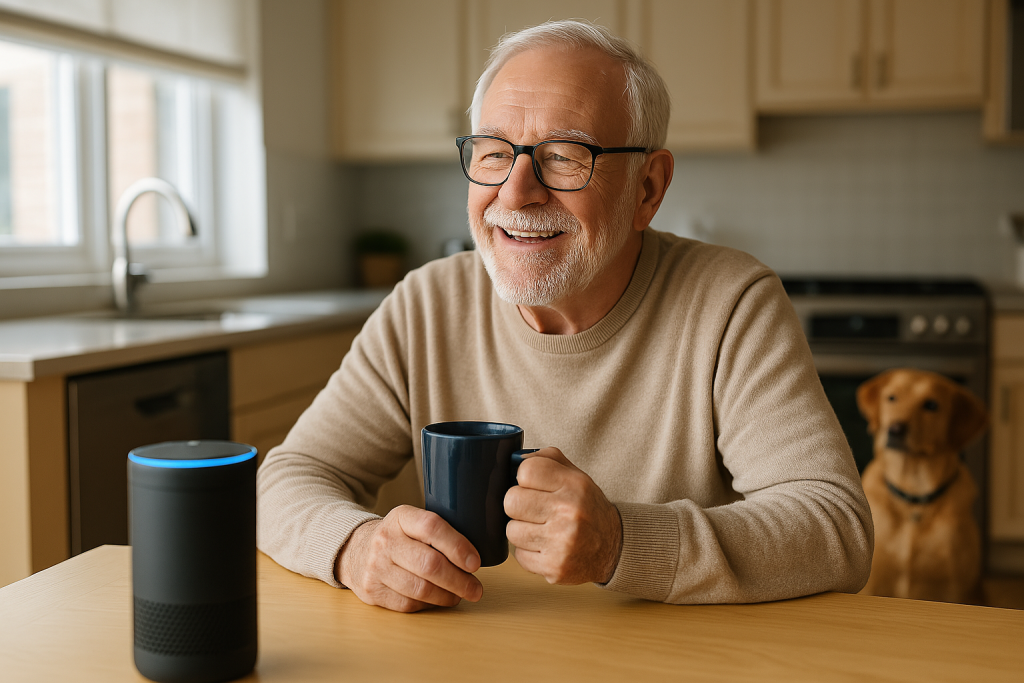
Voice assistants like Amazon Alexa or Google Assistant serve as central hubs for smart home control. They can provide weather updates, set reminders for caregiver visits, play familiar music, and answer questions throughout the day.
Emergency calling integration means you can ask for help hands-free. Some systems connect directly to family members or emergency services with simple voice commands.
Smart Plugs and Switches
These affordable devices transform ordinary appliances into smart home components. Smart plugs let you control lamps, fans, or small appliances remotely using your voice or smartphone. They’re perfect for creating lighting schedules or ensuring appliances are turned off when you leave home.
Smart switches replace traditional wall switches, allowing voice or remote control of ceiling lights and fans. Many include timer functions that automatically manage your daily routines.
Smart Thermostats for Comfort and Safety
Smart thermostats maintain comfortable temperatures while preventing dangerous extremes. They learn your preferences and adjust automatically throughout the day. Some models alert family members if indoor temperatures become unsafe.
Energy savings are an added benefit, as these devices optimize heating and cooling based on your actual usage patterns rather than fixed schedules.
“A smart home isn’t about impressive gadgets or showing off the latest technology. It’s about comfort, safety, and maintaining the independence you’ve worked hard to preserve. For seniors living alone, even small smart upgrades can add significant reassurance without reducing your autonomy.”
Smart Doorbells and Locks
Modern smart doorbells show you who’s at the door through your smartphone or smart display, even when you’re in another room. This feature is particularly valuable for seniors who have mobility challenges or feel uncertain about answering the door.
Smart locks provide keyless entry using codes, smartphone apps, or even voice commands. Family members and caregivers can receive temporary access codes, eliminating concerns about lost or forgotten keys.
Medication Reminders and Pill Dispensers
Automated medication management addresses one of the most common challenges for seniors living independently. Smart pill dispensers provide timed alerts and can notify caregivers if doses are missed.
Some systems integrate with voice assistants, providing gentle spoken reminders at prescribed times. Advanced models even dispense correct dosages automatically.
Fall Detection and Emergency Alert Systems
Wearable devices with fall detection capabilities integrate seamlessly with smart home systems. If a fall is detected, these devices can automatically contact emergency services or family members.
Some smart speakers include emergency calling features activated by voice commands, providing help even if you can’t reach a phone.
Real-Life Scenarios: A Day in a Smart Home
Let me walk you through how smart home automation could enhance a typical day for seniors living alone.
Morning starts gently as smart lights gradually brighten to simulate sunrise. Your coffee maker, controlled by a smart plug, begins brewing your morning cup. Alexa provides the weather forecast and reminds you about today’s doctor appointment.
Midday brings helpful reminders as your voice assistant alerts you to take your medication. Your adult child checks in through the smart display for a quick video chat, seeing you’re doing well without making you feel monitored.
This seamless integration of technology supports independence and privacy, while at the same time maintaining safety and connection with friends, family, and caregivers.
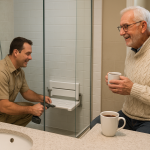
Evening activities become safer as motion sensors guide you to the bathroom with soft lighting that won’t disturb your night vision. The smart thermostat adjusts temperature for comfortable sleep.
Nighttime security activates automatically as smart locks engage, and the security system arms itself. Your family receives a simple notification that all systems are normal, giving them peace of mind.
Overcoming Common Concerns About Smart Homes
“I’m Not Good with Technology”
This concern is completely understandable and very common. However, modern smart home devices are designed for simplicity. Voice control eliminates the need to learn complicated interfaces. Many adult children help with initial setup, then step back as their parents gain confidence.
Start with devices that need minimal interaction, like motion-sensor lights or smart plugs. As comfort grows, layering-in voice assistants or smart displays becomes natural.
Cost Concerns
Smart home automation doesn’t require a massive upfront investment. Begin with one or two affordable devices like smart plugs or basic voice assistants. Build your system gradually as you discover which features provide the most value.
Many devices pay for themselves through energy savings or by reducing the need for certain services.
Privacy and Security Worries
Choose reputable brands with strong privacy policies and security features. Most devices allow you to control data sharing and can be configured to work locally without sending information to external servers.
I always suggest working with professional installers or tech-savvy family members to ensure your network provides the benefits you want while it remains secure.
Planning Your Smart Home Setup
Identify Your Priorities
Consider which aspects of daily life could benefit most from automation. Safety concerns like lighting and locks often take priority, followed by convenience features like voice assistants and smart plugs.
Start with one smart home feature. Let the rest grow organically, as your needs and confidence grow.
Communication needs vary by family situation. Some seniors prioritize video calling capabilities, while others focus on emergency alert systems.
Start Simple and Build Gradually
Begin with a single voice assistant or smart lighting system. These foundational devices help you understand how smart home automation works before expanding to more complex systems.
Smart home ecosystems are available from several tech providers, like Google, Amazon, and Apple, and ensure your devices work together seamlessly. Choosing one ecosystem simplifies setup and daily use.
Get Help When Needed
Work with tech-savvy family members or professional installers for initial setup. Many retailers offer installation services specifically for seniors, ensuring devices are configured properly and safely.
Not sure where to begin?
Starting small is often the smartest approach. Use this checklist to lay the groundwork for a smart home setup that supports safety, comfort, and confidence—right from day one.
Future Outlook: Smart Homes and Senior Independence
The future of smart home technology holds exciting possibilities for seniors aging in place. Artificial intelligence will enable more sophisticated safety monitoring that learns your routines and detects subtle changes that might indicate health concerns.
Ambient sensors will monitor daily activities without cameras or intrusive devices, providing family members with general wellness updates while respecting privacy. These systems will distinguish between normal routine variations and situations requiring attention.
Integration with healthcare providers and home care services will streamline medical monitoring and emergency response. Remote caregiver dashboards will provide professional caregivers with relevant information while maintaining your independence and dignity.
Smart homes will become even more intuitive, requiring less active management while providing greater safety and convenience benefits.
Technology That Serves You
I’ve seen how the right smart home setup can transform concerns into confidence. Motion lights prevent midnight stumbles. Voice assistants provide companionship and practical help. Smart locks eliminate worries about home security. Medication reminders ensure health routines stay consistent.
The key is choosing technology that fits your lifestyle rather than forcing your lifestyle to accommodate technology. Smart home automation is meant to simplify your daily routines.
Your adult children will appreciate knowing you have additional layers of safety and support, especially during times when they can’t be physically present. Smart homes bridge the gap between complete independence and needed assistance.
Final Thoughts
Technology should support your life—not complicate it. The right smart home setup can do exactly that. Start small, build gradually, and discover how these thoughtful upgrades can enhance your daily life while preserving the independence you value most.
Remember, you’re not adapting to technology—the tech is adapting to you. That’s what makes smart home automation so valuable for seniors who want to continue living safely and comfortably in their own homes.