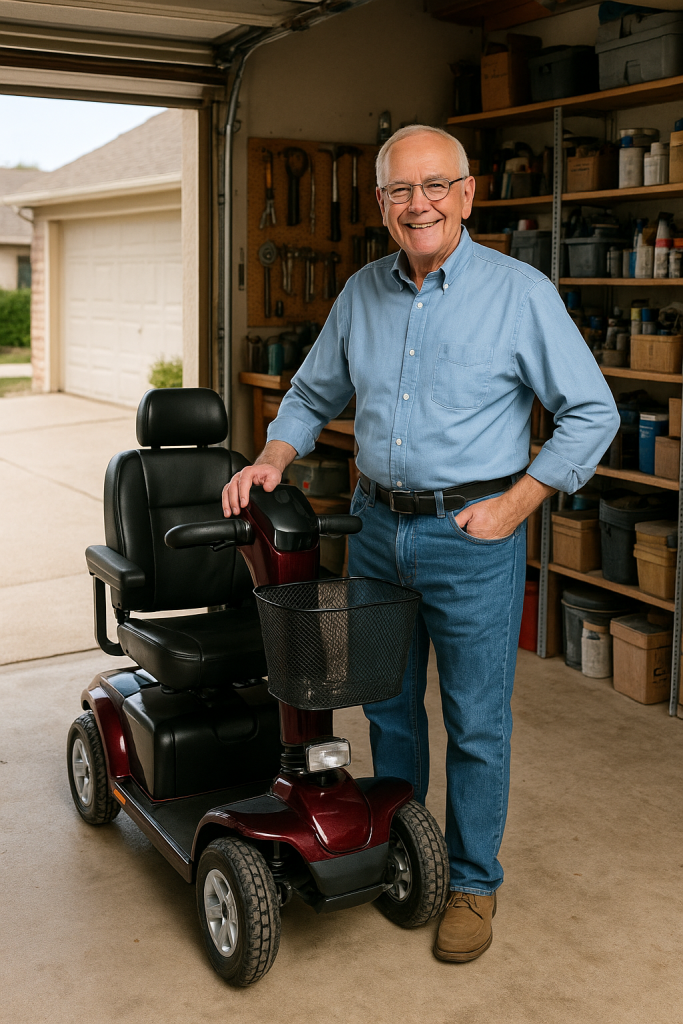
For seniors aging in place, staying mobile and independent becomes increasingly important with time. When walking long distances becomes difficult, a powered mobility scooter offers a practical solution. While some might see getting a mobility scooter as a sign of declining health, these devices actually provide a renewed sense of freedom.
This article explores the different types of mobility scooters available and how they can benefit a senior’s life and mindset.
Find the Perfect Powered Mobility Scooter
Scooters come in a wide range of styles, each designed to suit different needs and environments. Different models serve different needs, lifestyles, and environments. Understanding the options available is the first step toward making the right choice.
A Power Scooter with Travel in Mind
Travel scooters are designed with convenience in mind. These lightweight models can be folded or disassembled without tools, making them perfect for seniors who:
- Travel frequently
- Have limited storage space
- Need to transport their mobility scooter in a car trunk
- Use their scooter mainly for short trips
Most travel scooters weigh between 40-70 pounds when disassembled, with the heaviest piece typically weighing less than 30 pounds. This makes them manageable for many caregivers or family members to lift. A foldable mobility scooter may offer less range and power than larger models, but its compact size makes it ideal for travel and storage.
Three-Wheel Scooters: Indoor Navigation Masters
Three-wheel scooters feature a single wheel in front and two in the back, creating a tighter turning radius that excels in:
- Narrow hallways
- Small apartments
- Crowded stores
- Indoor environments with tight corners
These models are often lighter than their four-wheel counterparts while still offering decent battery life. The trade-off is slightly less stability on uneven surfaces. For seniors who spend most of their time indoors or in well-maintained areas, a three-wheel scooter provides the perfect balance of maneuverability and function.
Four-Wheel Scooters: Stability and Comfort
When stability matters most, four-wheel scooters deliver peace of mind with:
- Enhanced balance on uneven terrain
- Greater weight capacity
- More comfortable rides over longer distances
- Better handling on outdoor surfaces
These models distribute weight more evenly, reducing the risk of tipping when navigating slopes or curbs. Many seniors prefer four-wheel scooters for daily errands, neighborhood outings, and situations where reliable performance is essential. The added stability comes with a wider turning radius, making them less ideal for tight indoor spaces.
Heavy-Duty Powered Mobility Scooter
“Remember that mobility needs may change over time. What works perfectly today might need adjustment in the future. Stay open to reassessing your mobility solutions as circumstances evolve.”
Heavy-duty mobility scooters are engineered for durability and support, featuring:
- Higher weight capacities (typically 350-500 pounds)
- Reinforced frames and components
- More powerful motors
- Enhanced suspension systems
These robust models offer peace of mind for larger individuals or those requiring extra capacity for oxygen tanks or other medical equipment. Heavy-duty scooters typically feature longer battery life and can handle regular, extended use without strain.
All-Terrain Powered Mobility Scooter
For seniors who refuse to be limited by traditional mobility devices, all-terrain scooters provide:
- Larger, air-filled tires for shock absorption
- Advanced suspension systems
- Higher ground clearance
- More powerful motors and batteries
These scooters can handle grass, gravel, parks, beaches, and other challenging surfaces that would stop standard models. While they’re typically larger and more expensive, all-terrain scooters open up a world of outdoor possibilities for nature-loving seniors.
How do you know which powered mobility scooter is right for your needs?
With so many types available—each designed for different lifestyles, terrain, and comfort levels—it helps to see them side by side. This quick comparison breaks down the key features, ideal use cases, and trade-offs to help guide your decision:
Types of Powered Mobility Scooters
| Scooter Type | Best For | Key Features | Trade-Offs |
|---|---|---|---|
| Travel Scooter | Frequent travelers, tight storage | Foldable, lightweight, trunk-friendly | Less power, shorter range |
| 3-Wheel Scooter | Indoor use | Tight turning radius, compact design | Less stable on uneven terrain |
| 4-Wheel Scooter | Outdoor surfaces, errands | More stability, greater comfort | Wider turning radius |
| Heavy-Duty Scooter | Higher weight capacity, daily use | Reinforced frame, extended battery life | Heavier, less portable |
| All-Terrain Scooter | Rural areas, nature outings | Suspension, large tires, high clearance | Bulky, higher cost |
The Emotional Journey: From Resistance to Empowerment
Deciding to use a powered mobility scooter often involves complex emotions. Understanding this psychological journey can help seniors and their families navigate the transition more smoothly.
Overcoming Initial Hesitation
Many seniors resist using mobility aids because they worry about:
- Appearing old or disabled to others
- Losing their remaining independence
- Admitting physical limitations
- Being treated differently by friends and family
These concerns are natural and valid. The stigma around mobility aids has deep roots in our society’s emphasis on self-reliance. However, this perspective often changes dramatically once a senior begins using a scooter.
“One study found that 78% of mobility scooter users reported significant improvement in their quality of life after adopting a power scooter. Rather than marking the end of independence, a mobility scooter often represents its continuation under new circumstances.”
Experiencing the Freedom Effect
After making the transition to using a powered mobility scooter, most seniors report surprising benefits:
- Increased social participation
- Less physical pain and fatigue
- More spontaneous outings
- Greater confidence in public spaces
- Reduced reliance on others for basic tasks
Shifting the Mindset: Mobility Gain vs. Loss
The key psychological shift involves reframing how we think about mobility assistance. Instead of focusing on what’s been lost, successful scooter users concentrate on what they’ve gained:
- Energy conservation for more meaningful activities
- Extended range for daily activities
- Reduced risk of falls and injuries
- More opportunities for social engagement
This mindset shift doesn’t always happen overnight, but with support and positive experiences, most seniors come to view their scooter as a tool for freedom rather than a symbol of decline.
Is it normal to feel uncertain about using a mobility scooter?
Absolutely. For many seniors, the decision to use a powered mobility scooter brings up a mix of emotions. But that uncertainty often fades once the benefits become clear. Here’s a look at the emotional journey many people experience—from hesitation to newfound confidence:
The Emotional Journey of Adopting a Powered Mobility Scooter
| Emotional Stage | Common Thoughts | Supportive Reframe |
|---|---|---|
| Hesitation | “Do I really need this?” | You’re choosing independence, not giving it up. |
| Stigma or Fear | “What will others think?” | This is about living life on your terms. |
| First Use | “This feels different…” | It also feels easier and less tiring. |
| New Routine | “I can do more on my own again.” | Confidence builds with regular use. |
| Empowerment | “Why didn’t I do this sooner?” | Your world just got bigger, not smaller. |
Essential Factors to Consider before Purchasing
Choosing the right mobility scooter requires careful thought about several important factors. Taking time to assess these considerations can prevent costly mistakes and ensure satisfaction.
Where Will You Ride?
The environments where you’ll use your powered mobility scooter should heavily influence your choice:
- Primarily indoors: Consider narrow, maneuverable models with tighter turning radii
- Mostly outdoors: Look for larger wheels, better suspension, and weather protection
- Mixed use: Mid-range models with decent battery life and moderate maneuverability
- Specific terrain challenges: All-terrain models for rural areas or uneven surfaces
Be realistic about your lifestyle and needs. A scooter that performs perfectly in a showroom might not be ideal for your specific living situation or daily routines.
Weight Capacity: Safety and Comfort
Every mobility scooter has a maximum weight capacity that should never be exceeded:
- Standard models: Usually support 250-300 pounds
- Heavy-duty models: Can accommodate 350-500 pounds
- Bariatric models: Specially designed for users over 500 pounds
Remember to account for additional items you might carry, such as oxygen tanks, shopping bags, or personal belongings. Choosing a scooter with a capacity well above your weight ensures better performance and longevity.
Battery Life and Charging Convenience
Battery performance can make or break your mobility scooter experience:
- Range per charge: Typically between 7-20 miles depending on the model
- Battery type: Most use sealed lead-acid or lithium-ion batteries
- Charging time: Usually 8-12 hours for a full charge
- Removable batteries: Allow for charging without moving the entire scooter
Consider how far you typically travel in a day and whether you’ll have convenient access to charging locations. Some users find it helpful to purchase a spare battery for longer outings or travel.
Portability: Transportation Considerations
If you plan to transport your scooter regularly, portability becomes crucial:
- Foldable models: Can be stored in car trunks without disassembly
- Disassembly: Look for tool-free systems with lightweight components
- Vehicle lifts: May be necessary for heavier, non-disassembling models
- Weight of heaviest piece: Should match the lifting capacity of caregivers
Remember that even “portable” scooters require some strength to lift. Test the process before purchasing if possible, or ensure you’ll have assistance when needed.
For more help, see our full guide to the Best Ramp for Scooters.
Comfort and Accessories: Details Matter
Small features can significantly impact your daily experience:
- Seat padding and width: Critical for comfort during extended use
- Armrest adjustability: Affects posture and comfort
- Storage options: Baskets, under-seat compartments, and cup holders
- Weather protection: Canopies or covers for outdoor models
- Lighting: Headlights, taillights, and turn signals for safety
Don’t overlook these details in favor of bigger features. The most powerful scooter won’t be useful if it’s uncomfortable to sit in for more than a few minutes.
Powered Mobility Scooter: Gateway to Independent Living
Power scooters represent just one aspect of the broader concept of aging in place—the ability to live safely and independently in one’s own home as long as possible. When properly selected and used, these devices can dramatically extend a senior’s ability to:
- Maintain their own household
- Complete errands independently
- Participate in community activities
- Preserve dignity and autonomy
- Reduce caregiver burden
“With the right perspective and information, a powered mobility scooter becomes not a last resort, but a proactive choice to extend your independence and quality of life for years to come.”
Research shows that maintaining independence is strongly linked to better mental health outcomes for seniors. Powered mobility scooters help bridge the gap between desire for independence and physical limitations.
Beyond the Basics: What Comes Next?
While this overview provides essential information about scooters, there’s much more to explore before making a final decision:
Powered Mobility Scooter Comparisons
Not all power scooters deliver equal quality and reliability. Researching reputable manufacturers and reading verified user reviews can provide valuable insights into:
- Long-term durability
- Company warranty and service
- Availability of replacement parts
- User satisfaction with specific features
Financial Assistance Options
A power scooter represents a significant investment, but several programs can help offset the cost:
- Medicare Part B (with doctor’s prescription and qualifying conditions)
- Veterans Affairs benefits
- State Medicaid programs
- Non-profit organizations and foundations
- Rental and financing programs
Understanding these options can make quality mobility assistance more accessible for those on fixed incomes.
“Many new users benefit from brief training sessions to build confidence and ensure safe operation from day one.”
Safety First: Operating Guidelines
Learning to use a mobility scooter safely requires attention to:
- Proper seating and posture
- Speed control in different environments
- Navigating doorways and tight spaces
- Managing ramps and inclines
- Weather considerations
Embracing Mobility on Your Terms
“If you use your powered scooter both indoors and out, don’t overlook how much allergens it can track into your home. Check out my guide on how-to allergy proof your home for practical tips—especially if you’re managing allergies or respiratory issues.
Choosing to use a powered mobility scooter doesn’t mean giving up independence—it means adapting to maintain it. By selecting the right model for your specific needs, you can continue engaging with your community and enjoying activities that matter to you.
Final Thoughts
Power scooters are a significant part of aging in place, offering seniors the ability to continue living independently. By making informed choices, seniors and their families can ensure that mobility scooters serve as enablers of independence rather than symbols of loss. A powered mobility scooter doesn’t limit your lifestyle—it protects it. Stay tuned for more in-depth guides and reviews to help navigate this important decision.