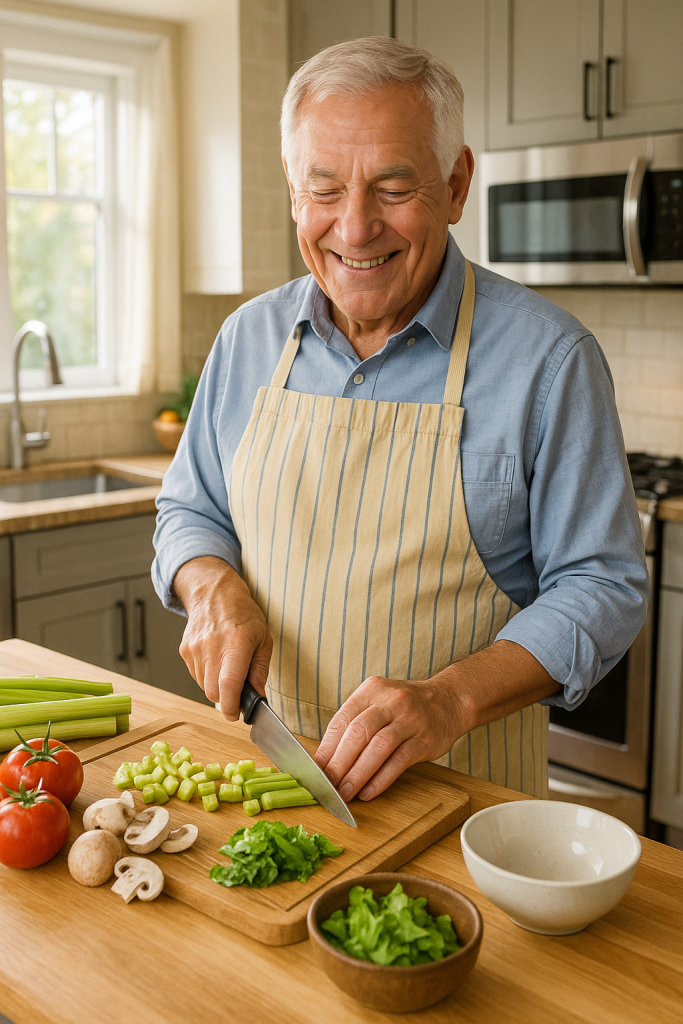
I’ve learned through years of navigating the aging-in-place journey, that healthy food for seniors isn’t just about eating well—it’s about maintaining kitchen independence, staying food curious, and bolstering nutrition to the fullest.
Whether you’re a senior looking to improve your own nutrition or an adult child helping your parents age gracefully, I want to share practical strategies that make nutritious eating both achievable and enjoyable.
The truth is, good nutrition becomes even more important as we age. However, it doesn’t have to be complicated or overwhelming. With the right approach to meal planning, smart food choices, and modern delivery options, seniors can maintain excellent nutrition while living independently at home.
Why Healthy Food for Seniors Matters More Than Ever
As our loved ones’ age, their nutritional needs change dramatically. Yet many seniors face unique challenges that make maintaining good nutrition harder than it should be.
The stakes are now higher. Poor nutrition in seniors leads to weakened immune systems, increased fall risk, slower healing, and cognitive decline. On the flip side, nutritious meals for seniors can help maintain muscle mass, boost energy levels, support brain health, and keep independence intact longer.
“Social elements add value beyond just food. Some meal delivery services can include wellness check-ins, nutrition education, or phone support that helps reduce feelings of isolation.”
Common Challenges
- Reduced appetite and changing taste preferences
- Difficulty shopping for groceries or preparing meals
- Fixed incomes limiting food choices
- Social isolation affecting meal enjoyment
- Medication side effects impacting appetite
But I’ve found that when we address these issues head-on with real solutions, seniors can thrive. They feel more energetic, stay mentally sharp, and maintain their independence longer.
Essential Nutrition Foundations for Healthy Food for Seniors
Understanding senior nutrition starts with recognizing that older adults have unique dietary needs. I suggest that families think of nutrition as medicine—it can be powerful.
Building Blocks of Nutritious Meals for Seniors
Protein Takes Center Stage
As we age, our bodies need more protein to maintain muscle mass and strength. For maintaining muscle, I generally recommend including lean protein at every meal. Think grilled chicken, fish, eggs, beans, or Greek yogurt. These foods help prevent the muscle loss that can lead to falls and loss of independence.
Quality Carbohydrates Fuel the Brain
Whole grains like brown rice, quinoa, and oats provide steady energy throughout the day. They’re also rich in fiber, which helps with digestion—a common issue for many seniors.
Healthy Fats Support Heart and Brain Health
Brain supporting foods, such as olive oil, avocados, nuts, and fatty fish, like salmon contain omega-3 fatty acids that fight inflammation and support cognitive function.
Critical Nutrients in Healthy Food for Seniors
Calcium and Vitamin D work together. Ideally, seniors should include dairy products, fortified plant-based milks, and leafy greens in their daily routine to keep bones strong and prevent fractures.
Potassium helps manage blood pressure. Bananas, sweet potatoes, and beans are excellent sources that most seniors enjoy eating.
B vitamins support energy and brain function. These are found in whole grains, leafy vegetables, and lean meats.
Hydration, while crucial, often gets overlooked. Combine this with other daily habits that support brain health for even greater benefits.Many seniors confuse thirst for hunger or avoid drinking fluids to reduce bathroom trips. One suggestion is to sip water between meals and include water-rich foods like soups, fruits, and vegetables in your daily diet.
Adapting Healthy Food for Seniors to Individual Needs
Every older adult has different needs and preferences. That’s why the focus should be on making nutritious meals for seniors both practical and enjoyable.
“While you’re focusing on how the meal looks, don’t forget how it smells. Fragrance plays a big role in making food more appetizing—especially for seniors with reduced taste sensitivity. Aromatic herbs like basil, oregano, or even a pinch of saffron can awaken the senses and turn an ordinary meal into something truly appetizing.”
Managing Appetite Changes
Small, frequent meals work better than three large ones for many seniors. Eating a small meal every 3-4 hours can maintain energy levels and prevent overwhelming smaller appetites.
Making food more appealing often requires creativity. Try using colorful vegetables, varying textures, and presenting meals in a novel way. Sometimes the difference between eating well and not eating enough is simply how good the food looks on the plate.
Addressing Physical Challenges
Texture modifications can be game changers for seniors with chewing or swallowing challenges. Soft-cooked vegetables, ground meats, and smooth soups can provide the nutrition without the frustration.
Enhancing flavors without salt becomes important for heart health. Consider using herbs, spices, lemon juice, and vinegar to make healthy food for seniors taste amazing while protecting cardiovascular health.
Easy-to-handle foods matter too. Think pre-cut vegetables, single-serving containers, and foods that don’t require complex preparation help maintain independence in the kitchen.
Smart Meal Planning Strategies for Healthy Food for Seniors
I’ve found that successful senior nutrition always starts with planning. When seniors and their families strategize in advance, they eat better and stress less about meals.
Creating Weekly Menus That Work
Start with a simple weekly template—plan seven days at a time, with each meal including a protein, vegetable, and whole grain. This ensures nutritious meals for seniors without overthinking every choice.
Focus on variety within simplicity. Rotate between favorite proteins and vegetables rather than eating the same thing every day. This prevents boredom while maintaining nutritional balance.
Plan for leftovers strategically. Make extra portions that can be repurposed into new meals. Sunday’s roast chicken becomes Monday’s chicken salad and Tuesday’s soup.
Batch Cooking for Success
Prepare ingredients in bulk when energy levels are high. Wash and chop vegetables, cook grains, and prepare proteins that can be mixed and matched throughout the week.
Freeze individual portions of soups, stews, and casseroles. This creates a stockpile of healthy food for seniors that’s ready when cooking feels overwhelming.
Use simple cooking methods like slow cookers, sheet pan meals, and one-pot dishes that minimize cleanup while maximizing nutrition.
Smart Snacking Strategies
Keep nutrient-dense snacks handy. Greek yogurt with berries, apple slices with almond butter, or hard-boiled eggs provide protein and satisfaction between meals.
Prepare snack portions in advance. Small containers of nuts, cut vegetables with hummus, or cheese and crackers make healthy choices as convenient as processed options.
Food Delivery Solutions for Healthy Food for Seniors
Modern food delivery services have revolutionized how seniors can access nutritious meals for seniors. I’ve seen these services restore independence and improve nutrition for many families.
Senior-Focused Meal Delivery Services
Specialized senior meal services understand the unique needs of older adults. These companies often employ dietitians to create menus specifically designed for senior nutrition.
Look for customized meal options that accommodate common health conditions. Many services offer low-sodium, heart-healthy plans, as well as meals that manage blood sugar.
“Many stores offer senior discounts and priority delivery slots. Some even provide personal shopping services where staff can make substitutions based on availability.”
Grocery Delivery for Independent Cooking
Online grocery shopping works well for seniors who enjoy cooking but struggle with shopping trips. The ability to browse at their own pace and have items delivered removes significant barriers.
Curbside pickup offers a middle ground for seniors who want to maintain some control over their food selection while avoiding the physical demands of shopping.
Meal Kit Services Adapted for Seniors
Pre-portioned meal kits eliminate the guesswork and waste that often discourage seniors from cooking. Everything needed for healthy food for seniors arrives in exactly the right amounts.
Look for senior-friendly options with larger print instructions, simpler preparation steps, and age-appropriate portion sizes.
Family-style kits work well when adult children visit regularly and can help with meal preparation.
Making Food Delivery Work for Your Family
Success with food delivery services will require some strategy. Your goal should be to find the best fit for your specific situation. But, in general, it’s something you’ll need to set up only once—or modify infrequently as circumstances evolve.
Choosing the Right Service
Assess dietary restrictions first. Make sure the service can accommodate specific health needs—whether it’s low-sodium, gluten-free, or meals that manage blood sugar.
Consider preparation preferences. Match the service to the person’s abilities and interests. Some seniors want fully prepared meals, while others enjoy simple cooking tasks.
Start with trial periods when possible. Most services offer introductory rates or sample meals that let families test the fit before committing.
Maximizing Delivery Benefits
Schedule deliveries strategically to ensure optimal freshness. Coordinate delivery times with high-energy hours of the day—when seniors are most alert and able to organize their food.
Involve caregivers, family or neighbors in the process when needed. Having someone to help unpack deliveries and organize the refrigerator ensures nothing gets forgotten or spoiled.
Keep backup options available for delivery delays or service interruptions. A few frozen meals or shelf-stable options provide peace of mind.
Building Long-Term Success with Healthy Food for Seniors
Sustainable senior nutrition requires thinking beyond individual meals to create lasting habits and support systems.
Creating Support Networks
Involve family members in meal planning and preparation when possible. This creates shared goals and ensures everyone understands the senior’s nutritional needs.
Connect with community resources. Senior centers often offer cooking classes, nutrition education, and dining get-togethers that make healthy food for seniors more enjoyable.
Consider professional support when needed. Registered dietitians can provide personalized guidance, especially for seniors managing multiple health conditions.
Tracking Progress and Adjusting Plans
Keep simple food records to identify patterns and preferences. This doesn’t need to be overly complicated—a basic journal noting meals and energy levels provides valuable insights.
Regular health check-ins with healthcare providers help ensure nutritious meals for seniors are supporting overall health goals.
Stay flexible as needs change. What works today might need adjustment as health, mobility, or preferences evolve.
Maintaining Social Connections Through Food
Shared meals combat isolation and are key to staying socially connected while aging in place. Whether it’s family dinners, potluck gatherings, or dining with neighbors, social eating improves both nutrition and mental health.
Cooking together creates meaningful activities. When adult children or grandchildren help prepare healthy food for seniors, it strengthens family bonds while encouraging healthy eating.
Community dining programs offer both social interaction and nutritious meals. Many senior centers and community organizations provide these valuable services.
Overcoming Common Challenges
In my experience, every family faces obstacles when implementing better senior nutrition. Here’s a few suggestions for dealing with the most common challenges.
Budget Concerns
Focus on nutrient density rather than expensive specialty foods. Beans, eggs, seasonal vegetables, and whole grains provide excellent nutrition at reasonable costs.
Take advantage of senior discounts at grocery stores and restaurants. Many businesses offer special pricing for older adults.
Community food programs can supplement grocery budgets while providing nutritious meals for seniors. Food banks and senior meal programs often have income guidelines that many families qualify for.
Motivation and Habit Change
Start small with one or two simple ways to build healthy habits. Success builds momentum for additional improvements.
Celebrate progress rather than focusing on perfection. Any improvement in healthy food for seniors is worth acknowledging and building upon.
Make it enjoyable by trying new recipes, eating with others, or learning about nutrition together. When eating well becomes interesting rather than a chore, compliance improves dramatically.
Your Path to Better Senior Nutrition
The journey to better healthy food for seniors doesn’t have to be overwhelming or complicated. By understanding the unique nutritional needs of aging adults, planning strategically, and leveraging modern delivery options, families can ensure their loved ones thrive while aging in place.
Remember, good senior nutrition is about progress, not perfection. Small, consistent improvements in food choices, meal planning, and eating habits create significant long-term benefits. Whether you’re a senior taking charge of your own nutrition or an adult child supporting your parents, the strategies in this guide provide a practical roadmap to success.
Final Thoughts
The key is finding the right combination of traditional cooking, meal planning, and modern conveniences that work for your specific situation. With patience, creativity, and the right support systems, balanced meals for older adults become an achievable goal. They support independence, health, and quality of life for years to come.
Start where you are, use what works, and don’t hesitate to ask for help when needed. Your future self—or your parents—will thank you for taking these important steps toward better nutrition today.