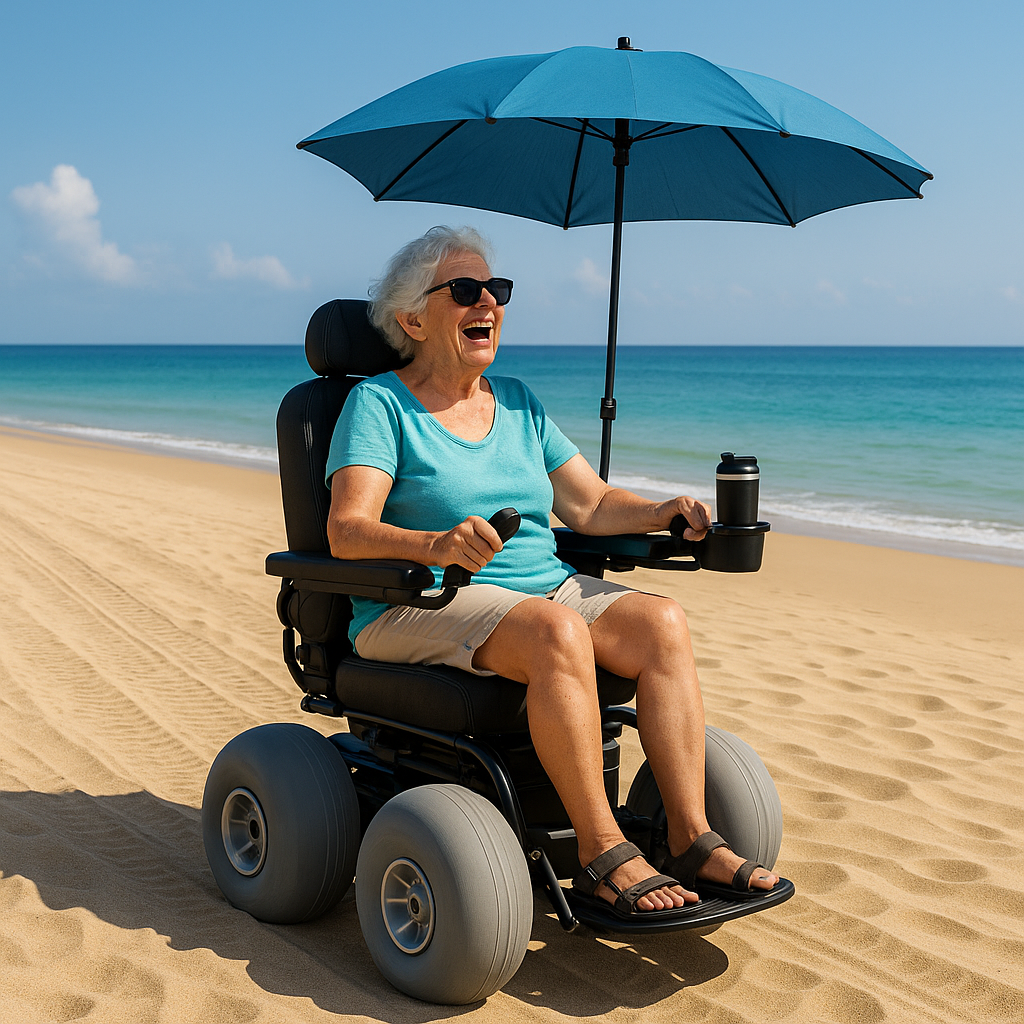
Nothing says summer like a day at the beach—but for those needing wheelchairs—sand and surf can pose serious challenges. Enter the beach wheelchair—a specialized mobility aid that makes coastal adventures accessible for everyone.
“Want to know the most interesting thing I’ve found about the beach wheelchair market? They are often a product of “cottage industry”—small-scale makers and rental shops stepping up to meet regional demand. This is fantastic for innovation and community-based solutions, but it also means there’s no single design standard.”
I’ve spoken with families who lamented beach days were a thing of the past, that is until they discovered these unique accessibility devices.
Wheelchairs for the beach feature wide, buoyant tires that glide over sand instead of sinking into it.
They open up a world of seaside enjoyment for seniors, people with mobility challenges, and anyone who has struggled with a traditional manual wheelchair on soft terrain.
But here’s something most guides don’t tell you—the world of beach wheelchairs is surprisingly diverse.
From handcrafted local designs to advanced floating models, it’s a niche market full of clever adaptations and unique features—which I’m about to unpack for you in this guide.
What Is a Beach Wheelchair?
A beach accessible wheelchair is a specialized mobility aid designed specifically to navigate sandy, uneven coastal terrain. Unlike standard wheelchairs that will sink into soft sand, beach-going wheelchairs have unique features and accessories that make beach access possible and enjoyable.
“From push-style to motorized models, beach wheelchairs now offer more freedom and flexibility than ever before.”
These wheelchairs for the beach are transformative for families that like to visit the seaside. Most sand wheelchairs have been around since the 1990s, but recent innovations have made them more comfortable and functional.
They serve as a vital tool for seniors who want to continue enjoying coastal visits, people with disabilities, and anyone who needs mobility assistance on soft sandy surfaces.
Beyond the wheelchair itself, a few smart accessories can make beach outings more comfortable, safe, and enjoyable. Here are the most useful add-ons to consider:
Practical Beach Wheelchair Accessories
| Accessory | Benefit |
|---|---|
| Sunshade or Umbrella Mount | Protects from sun exposure and heat |
| Cup Holder or Cooler Pouch | Keeps drinks accessible and cold |
| Safety Flag | Increases visibility in crowded or busy areas |
| Storage Pouch or Basket | Carries personal items, sunscreen, or snacks |
| Seat Cushion or Extra Padding | Adds comfort for longer outings and prevents soreness |
These accessories aren’t just extras— they can turn a simple wheelchair ride into a comfortable, stress-free beach day.
Key Features of a Beach Wheelchair
Balloon Tires
The most noticeable feature of any good beach wheelchair is its beefy footprint. I suggest looking for these distinctive balloon-style wheel and tire combinations first and foremost.
These aren’t just for show—even though they do look pretty cool! Their actual function is to spread weight (chair plus rider) over a larger surface area.
They actually prevent the wheelchair from sinking into soft sand. This design makes pushing much easier for caregivers and creates a smoother ride for users.
Corrosion-Resistant Materials
Beach environments, like salt water, sand, and sun are harsh on equipment and can quickly damage regular wheelchairs. That’s why quality beach accessible wheelchairs are constructed from marine-grade aluminum, stainless steel, or PVC materials.
A standard wheelchair can be ruined within a single trip to the beach, while properly designed beach wheelchairs last for years with only the most basic care.
Floating Capabilities
Some of the advanced models can actually enter the water safely. These floating wheelchairs allow users to enjoy the cooling sensation of ocean waves—something many seniors and people with mobility challenges will appreciate.
Comfortable Seat Design and Safety Harnesses
Beach wheelchairs typically feature waterproof, quick-drying seats with adjustable harnesses. Safety always comes first, especially for seniors with balance concerns.
The best beach wheelchairs include secure strapping systems that prevent sliding while still maintaining comfort during longer beach visits.
Push vs. Self-Propelled Options
Most beach wheelchairs require a caregiver to push them. This design choice makes them more stable on sand but does limit independence. Self-propelled beach wheelchair models do exist but are less common and often more expensive.
What makes a beach wheelchair truly safe and functional on the sand? Here are the key features to look for:
Key Features of a Beach Wheelchair
| Feature | Why It Matters |
|---|---|
| Balloon Tires | Prevent sinking, spread weight evenly, smooth ride |
| Corrosion-Resistant Materials | Withstand salt, sand, and sun—longer durability |
| Floating Capabilities | Allow safe entry into shallow water, enhance enjoyment |
| Comfortable Seat & Safety Harness | Waterproof seating with secure strapping for safety and comfort |
| Push vs. Self-Propelled | Push models offer stability; self-propelled allow independence but cost more |
Focusing on these features ensures you select a beach wheelchair that isn’t just functional but also safe, durable, and enjoyable for real-world beach trips.
“I’ve noticed a growing trend—especially along the U.S. East Coast—toward motorized electric beach wheelchairs. They’re almost scooter-like and offer a new level of independence allowing users to navigate sandy terrain without assistance. Most are engineered with robust motors, long battery life, and smart safety features. While traditionally push-type chairs have been more common, the shift toward electric models is opening up exciting possibilities for solo beachgoers.”
Types of Beach Wheelchairs
Manual Push Beach Wheelchairs
The most common type I recommend for most families is the standard manual push beach wheelchair. These chairs have large rear wheels and smaller front wheels—all with the distinctive balloon design.
They’re relatively affordable and work well for occasional beach trips. Caregivers push these chairs from behind, making them ideal for family outings where assistance is available.
Self-Propelled Beach Wheelchairs
For more independent users, self-propelled beach wheelchairs allow users to move themselves across the sand. They feature specially positioned wheels that users can reach and push.
I find these to be rare and more expensive, but they provide a level of autonomy for those with upper body strength and coordination.
Floating Beach Wheelchairs
These specialized models can safely enter shallow water. With extra buoyancy and waterproof materials, floating beach wheelchairs let users enjoy the refreshing sensation of ocean waves.
Seniors can reconnect with water experiences using these chairs. The joy of feeling ocean water again after years of avoiding the beach must be truly glorious.
All-Terrain Wheelchairs
While not exclusively for beaches, all-terrain wheelchairs (with all-terrain tires) often work well on sand and other challenging surfaces like gravel paths, grass, and snow.
These versatile chairs are great for active families who enjoy various outdoor activities beyond just beach visits. They’re typically more expensive but offer broader usability across multiple environments.
Motorized Wheelchairs
Motorized wheelchairs for the beach are a gamechanger for people seeking greater independence at the beach.
These chairs are equipped with powerful electric motors and balloon-style wheels that handle sand, and uneven grades with ease—allowing users to navigate from boardwalk to beach without assistance.
Most models feature intuitive joystick controls that are easy to operate, along with safety features like anti-tip designs, adjustable speed settings, and emergency stop functions.
For seniors or individuals with limited upper body strength, these chairs open up a level of freedom that traditional push-type wheelchairs simply can’t match.
With so many types of beach wheelchairs available, which one best fits your needs? This quick guide compares the main options side by side:
Types of Beach Wheelchairs
| Type | Best For | Key Features |
|---|---|---|
| Manual Push | Families with caregiver support | Affordable, balloon wheels, easy to use |
| Self-Propelled | Independent users with upper body strength | Push rims, rarer, higher cost, user-driven mobility |
| Floating | Water access and wave experiences | Buoyant, waterproof, safe for shallow water |
| All-Terrain | Active families, multiple environments | Durable tires, works on sand, gravel, grass, snow |
| Motorized | Users seeking maximum independence | Joystick control, electric motor, balloon wheels, safety features |
Each type of beach wheelchair offers unique advantages. Choosing the right one depends on whether your priority is independence, family support, or the ability to enjoy the water itself.
Who Benefits from a Beach Wheelchair?
“Local disability advocacy groups are often a goldmine of information about accessible beaches and wheelchair programs—many maintain up-to-date lists of the best spots to visit.”
Seniors Aging in Place
Beach wheelchairs are especially valuable for older adults who wish to maintain family trips and traditions despite mobility changes. For many older adults, beach visits represent cherished memories and connections to family traditions that shouldn’t have to end due to mobility challenges.
Many seniors had thought they had to give up beloved beach visits until discovering these specialized chairs.
People with Disabilities
Individuals with permanent or temporary disabilities find these specialized wheelchairs essential for accessing beach locations. These chairs create opportunities for inclusive family activities and independent enjoyment of natural spaces.
Families on Vacation
When traveling with a family member who has mobility limitations, a beach wheelchair can make inclusive vacation experiences possible. Many popular destinations now offer rental programs to improve accessibility.
I recommend researching beach wheelchair availability before booking trips to the beach.
Caregivers Seeking Accessibility Solutions
Adult children caring for aging parents often search for ways to continue family traditions. Wheelchairs, that can access the beach, provide practical solutions that benefit both the user and their caregivers.
I experienced this exact situation when I met a woman while vacationing in Central America many years back.
I remember helping her find a beach wheelchair for her 79-year-old mother. She wanted to experience shell-collecting at sunrise. It was their first shared beach day in years—to say they were overjoyed would be an understatement.
How to Choose the Right Beach Wheelchair
“One thing I’ve learned while researching beach wheelchairs is that this market is still a bit of a niche. You’ll find fantastic designs, but not always the same features everywhere meaning no two rentals are exactly alike. It’s a great reminder to ask for photos and specs ahead of time—especially if comfort and safety are priorities for your beach day.”
Consider Your Usage Needs
First, I suggest families think about how often they’ll use a wheelchair on the beach. For occasional use during vacations, rentals make more sense. For families living near the coast who visit beaches regularly, purchasing their own beach wheelchair might be more practical and economical long-term.
Check Weight Capacity Carefully
Beach wheelchairs come with specific weight limits. Make sure to check these ratings before reserving a model. Most standard wheelchairs support between 250-300 pounds, but specialized models can accommodate higher weights.
Safety depends on choosing the right capacity for your needs.
Evaluate Portability Features
If you plan to transport the beach wheelchair regularly, foldability is even more important. Some models break down for easier storage and transport, while others remain rigid.
It would be well worth comparing these features with standard travel wheelchairs if portability is a priority for your family situation.
Prioritize Comfort and Safety
Look for comfortable seating with good support. Features like adjustable backrests, padded armrests, and proper head support make huge differences in user comfort, especially for seniors who may spend several hours in the chair.
Safety features like secure brakes and sturdy harnesses are non-negotiable for peace of mind.
Consider Maintenance Requirements
Beach environments are tough on equipment. Choose a beach wheelchair that’s easy to rinse and maintain. I advise families to look for simple designs with accessible parts that can be cleaned without specialized tools or mechanical knowledge.
Before choosing a beach wheelchair, take a moment to clarify your needs and priorities. This quick checklist will help you focus on what matters most for comfort, safety, and ease of use.
- ☐ How often will you use it?
- ☐ Push, self-propelled, or motorized?
- ☐ Weight capacity?
- ☐ Folding/portability needs?
- ☐ Comfort and safety features?
- ☐ Rental vs. purchase?
Where to Find or Rent a Beach Wheelchair
“Whatever your source, I strongly recommend reserving beach wheelchairs well in advance, especially during peak summer months. Nothing is more disappointing than arriving at a beach without appropriate mobility equipment when it could have been arranged with proper planning.”
Public Beaches with Accessibility Programs
Many popular beaches now offer free beach wheelchair loans as part of their accessibility services. I’ve seen this trend grow wonderfully over the past decade. Call ahead to reserve one, as availability is often limited.
Some beaches have online reservation systems, while others work on a first-come, first-served basis.
Senior Centers and Community Resources
Local senior centers often maintain beach wheelchairs for community use. These programs typically offer discounted or free access for residents. I encourage families to check with their local aging services departments about such programs before investing in their own equipment.
Specialized Rental Companies
In coastal areas, medical equipment companies frequently offer beach wheelchair rentals. Daily and weekly rates vary but expect to pay between $50-100 per day depending on location and chair features.
Many companies will deliver directly to your beach house or hotel for convenience.
Beach Wheelchair Cost Considerations
“Over the years I’ve learned that equipment rentals rarely mean the same thing everywhere. One company may include delivery and setup, while another expects you to handle everything yourself. When renting, make sure you’re clear on what’s included (delivery? battery charger? adjustable features?) so your day at the beach goes smoothly.”
Purchase Price Range
If you’re considering buying a beach wheelchair, prepare for an investment. The most basic models typically start around $500, while advanced models with floating capabilities or self-propulsion features can quickly exceed $2,500.
This may sound expensive at first but always remember to factor in long-term value when making this decision.
Rental Fee Structures
Rental fees vary widely by location and demand. In popular tourist areas, daily rates typically range from $50-100 with discounts for weekly rentals. Some companies require security deposits in addition to rental fees. I suggest budgeting for these costs when planning beach vacations.
Potential Financial Assistance
Some insurance plans may partially cover beach wheelchair purchases with proper documentation of medical necessity. Additionally, organizations serving specific disability communities sometimes offer grants or assistance programs.
Senior services agencies might also help identify financial resources for families with limited means.
Ongoing Maintenance Costs
If purchasing, remember to budget for maintenance. While generally low, yearly maintenance might include replacing worn parts, cleaning supplies, and occasional professional servicing.
Proper maintenance extends the wheelchair’s life and protects your investment.
Maintenance Tips for Beach Wheelchairs
“After any visit to the beach or waterfront, make sure to rinse your wheelchair thoroughly. It’s made to withstand the elements around the beach, but you still need to wash off the sand and salt that can wreak havoc with the articulated joints, hinges, and wheel bearings—as well as degrade the overall finish of your wheelchair. Remember also, use only garden hose pressure and avoid using a power washer—as its greater pressure can penetrate waterproof seals and bearings.”
Cleaning Your Wheelchair
The single most important maintenance step is thoroughly rinsing your beach wheelchair after each use. Salt, sand, and sun can damage equipment quickly if left untreated. It’s always best to use fresh water to rinse all moving parts and let the chair dry completely before storage.
This simple habit extends your chair’s lifespan dramatically.
Regular Equipment Checks
Before each use, check all connections, wheels, and safety features. Look for signs of wear or damage, paying special attention to wheel attachments and braking systems.
Small problems caught early prevent dangerous failures later on the beach.
Safety Considerations
Chair to Chair Transfers
Practice safe transfers between standard wheelchairs and beach wheelchairs on firm ground before attempting transfers on sand.
It’s a good idea to have two helpers present during transfers, especially for seniors or those with significant mobility limitations. Proper positioning of both chairs makes transfers much easier and safer.
Water Safety Awareness
If using a floating beach wheelchair, never leave the user unattended in the water—not even for a moment. Become familiar with wave patterns and tide schedules before entering the water.
Something else to remember—position floating chairs perpendicular to incoming waves for maximum stability and always maintain control of the chair.
Creating Lasting Beach Memories
Mobility beach chairs have transformed beachfront access for countless families that I’ve met over the years. They allow seniors to continue cherished traditions and create new memories with grandchildren.
They enable people with disabilities to enjoy natural spaces that were previously off-limits. Most importantly, they help families stay connected through shared experiences.
Final Thoughts
I encourage families to plan ahead, understand their options, and not let mobility challenges sideline a day at the beach. Whether renting for a special vacation or investing in your own beach accessible wheelchair, these specialized mobility devices open up possibilities for inclusive family fun.
“Know someone who’d love a beach day but thinks it’s out of reach? Share this guide—it might open up a whole new world of seaside memories.”
With the right beach wheelchair and proper planning, sand and surf can be accessible to everyone. The joy on a senior’s face when they feel ocean spray again after years away from the beach makes all the preparation worthwhile.
Beach days should be for everyone—and with today’s beach accessible wheelchair options, they truly can be.
Want to keep exploring? Here are some related articles: